
International Style
The pared-down modern architecture of the 1920s to 1960s: flat roofs, smooth walls, open plans and long bands of glass, built alike worldwide.
No works indexed yet · 10 related artists
No open-access works for International Style are in the index yet. They will appear here as more collections are indexed.
About
Through the 1920s architects in Germany, France and the Netherlands dropped ornament and heavy masonry in favour of light volumes carried on frames of steel or concrete. Walter Gropius's Bauhaus building in Dessau (1926), Ludwig Mies van der Rohe's Barcelona Pavilion (1929) and Le Corbusier's Villa Savoye (1931) are early landmarks. In 1932 Henry-Russell Hitchcock and Philip Johnson named the tendency in a New York exhibition and its accompanying book.
Look for flat roofs, white or glazed surfaces with no cornice, windows that turn corners, cantilevered floors and interiors that flow. The style travelled quickly: Richard Neutra and Rudolph Schindler built in California, Alvar Aalto finished his Paimio Sanatorium in Finland in 1933, and Oscar Niemeyer gave it curves in Brazil. After 1945 it became the language of corporate towers, such as Mies's Seagram Building (1958) in New York. Its uniformity later drew the criticism that fed Postmodernism.
Related artists
More in Design Movements
Italian Furniture and Design
Memphis Design
Mid-Century Modern Design
Modern and Contemporary Design
Modern and Contemporary Fashion Design
Modern Design
Post-War French Design
Postmodern Architecture and Design
Scandinavian Furniture and Design
Union des Artistes Modernes
Wiener Werkstätte
20th Century Furniture and Design
American Furniture and Design

American Mid-Century Design
American Studio Craft Movement
Art Deco Furniture and Design
Art Nouveau Furniture and Design
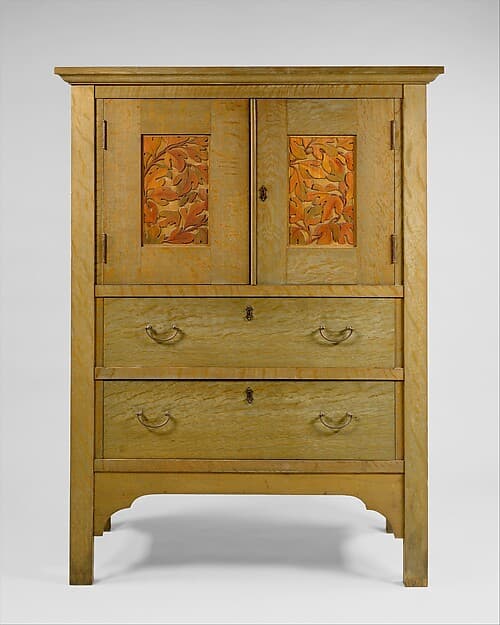
Arts and Crafts Movement
Brazilian Furniture and Design
British Furniture and Design
